

When Sponsors evaluate contract research organizations (CROs), scientific expertise, therapeutic experience, timelines, and pricing all matter. But once an organization has shown it can perform the work, another question takes center stage:
Can we trust this organization with our program?
The answer relies on the quality operation behind the work.
During vendor qualification, sponsors are looking for evidence that quality processes are well controlled, scalable, and consistently followed. They want confidence that if their program grows, regulations change, or an unexpected issue arises, your organization has the processes to respond effectively.
In essence, they’re looking for signs of quality maturity, and the organizations that can prove it will get a leg up on the competition.
Every Sponsor has its own qualification process, but there are several characteristics that consistently signal a mature quality operation. If you’re hoping to expand your Sponsor network, here are the five quality maturity signs you’ll want to showcase:
1. Audits are thorough, but not complex
Sponsors have a responsibility to ensure every vendor they work with is qualified, compliant, and capable of managing potential issues before risks emerge. (In fact, this Sponsor expectation was recently enforced with the updated ICH E6(R3) guidance.)
For CROs, this means handling frequent audits.
And the organizations that make those audits easy for Sponsors will likely make the shortlist of preferred vendors.
For example, imagine a Sponsor asks to see the current version of an SOP, the associated employee training records, and every change that has been made to the procedure over the last two years. Which CRO would you work with again based on their response?
- Option 1: The Quality team searches through multiple folders, emails another department for training records and waits an hour for a response, and then spends the next twenty minutes confirming they have the correct document version.
- Option 2: The quality team retrieves everything within minutes. The document history, approvals, training records, and audit trail are all connected, complete, and easy to follow.
Both teams may ultimately provide the same information, but the experience leaves a vastly different impression of the organization’s state of control.
That's why mature organizations don't think about audit readiness as something they do a few weeks before an inspection. It’s simply the byproduct of well-managed quality processes.
Get Audit Management Tips & More


Pro Tip: Look for an eQMS that includes audit sharing capabilities. This is a feature that allows Quality teams to create a secure, read-only workspace containing only the documents, records, and quality events relevant to a specific audit. Instead of navigating an entire system, Sponsors get only what they need when they need it.
But be careful – streamlined audits don’t mean sparse audits.
Make sure your system of record tells a complete story:
- Who approved this document?
- When was it revised?
- Is it attached to a CAPA?
- Which employees completed training on the new version?
- If AI was used to help generate content or perform an action within the quality system, can that activity also be traced?
Pay special attention to that last bullet. As organizations incorporate AI into regulated quality processes, audit trails must capture AI-assisted activities alongside human actions.
2. Your quality system flexes to fit sponsor needs
Each Sponsor comes with a different set of expectations for workflows, approval processes, documentation requirements, etc. and they expect their vendors to adapt to their preferences… not the other way around.
The problem is that some eQMS platforms are actually pretty rigid, forcing specific naming conventions or workflows (or charging serious fees to customize the system). For the CROs that use these systems, that means potential red flags like:
- Approval workflows that are significantly different than Sponsor requirements.
- Employees maintain information outside the system because of its inflexibility.
- Manual workarounds that create inconsistencies from one study or client to the next.
- Time-consuming or costly system customizations every time a new Sponsor or region introduces different requirements.
That’s why flexibility – a.k.a. configurability – is the name of the game for CROs hoping to build stronger Sponsor relationships.
Here’s the catch: Some vendors say they’re “configurable” when they really mean “customizable.” To find the truth, ask questions like:
- Can workflows be modified without custom development? As Sponsors request different approval paths or quality processes, your team should be able to make adjustments without IT intervention.
- Can forms and fields be updated as requirements change? Your eQMS should make it easy to add, remove, or modify fields as needed.
- Can permissions and roles be configured for different studies or clients? As your organization grows, you'll need to ensure the right people have access to the right information – and only that information – at all times.
- Can the system scale without extensive reconfiguration? Supporting a new Sponsor, expanding into another region, or taking on additional studies shouldn't require starting from scratch.
3. Your training program works – and you can prove it
Sponsors want more than a list of completed training assignments. They want confidence that the right employees are trained on the right procedures, that they understand those procedures, and that training is contributing to better quality outcomes.
Here are a few signs of a mature training program:
- You measure competency, not just completion. "Read and understood" may satisfy a training requirement, but it doesn't confirm employees retained the information. Competency tests, assessments, or other knowledge checks can help demonstrate that training is actually effective.
- They can quickly demonstrate training compliance. During a Sponsor audit, Quality teams should be able to report on who has completed required training, when they completed it, and which version of the procedure they were trained on. At-a-glance dashboards and real-time reporting make it much easier to answer these questions with confidence.
- They connect training to quality outcomes. Mature organizations don't evaluate training in isolation. They look for trends, like whether a revised SOP or targeted training initiative led to fewer deviations, recurring issues, or other quality events. That data helps demonstrate that training is reducing risk, not just checking a compliance box.
4. Issues are traced in detail from discovery to resolution
The fewer deviations that happen, the better – but deviations will happen. Sponsors don’t expect CROs to be perfect, but they do expect them to respond quickly and effectively when quality events occur.
The organizations that can clearly demonstrate the full lifecycle of every quality event (and do it quickly) will protect their reputations among Sponsors. This means being able to prove:
- How and when the issue was identified.
- Who investigated the event and what the root cause was.
- What corrective and preventive actions (CAPAs) were implemented.
- Whether those actions were effective at preventing recurrence.
That level of traceability gives Sponsors confidence that issues are managed through a consistent, controlled process designed to reduce future risk.
It’s why it’s important for your eQMS to connect quality events rather than treating them as separate records. Deviations, investigations, CAPAs, change controls, supporting documents, and approvals should all be linked together, creating a complete history that's easy to follow during audits and Sponsor reviews.
You’ll also want to have some key data points on hand, like:
- Average days to complete an issue or change control
- Percentage of issues closed by the established deadline
- Average recurrence of issues
The easier it is to tell the story of a quality event from beginning to end, the easier it becomes to demonstrate that your organization has a mature approach to continuous improvement.
5. Quality data is actionable
You can collect all of the data in the world, but if you can’t act on it, you don’t have “insights,” you just have numbers in a spreadsheet.
Sponsors want confidence that you're monitoring for trends, identifying potential risks early, and making improvements before risks become problems.
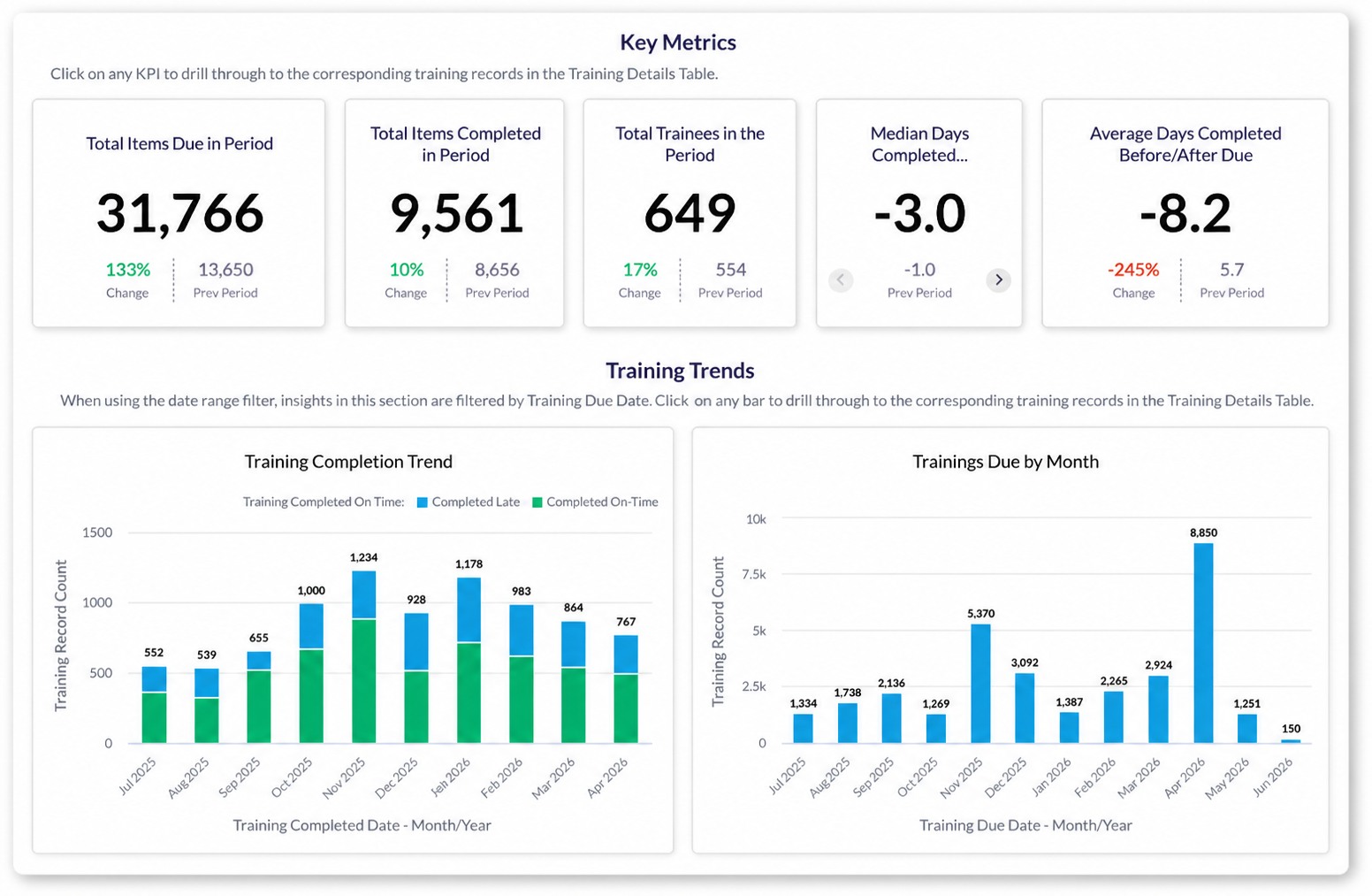
An example quality data report available in the ZenQMS Insights module.
In other words, they want evidence that quality management is proactive, not reactive.
Start by making sure your quality reporting tool can track things like:
- Deviation trends. Are issues increasing, decreasing, or recurring in certain areas?
- CAPA effectiveness. Are corrective actions preventing similar issues from happening again?
- Training effectiveness. Have targeted training initiatives led to measurable improvements in quality outcomes?
- Audit findings. Are the same observations appearing audit after audit, or is the organization learning from previous inspections?
- Process performance. How long does it take to close deviations, complete change controls, or approve critical documents?
Then, make sure your tool helps you take action. A couple of nice features to look out for are:
- Automatic alerts based on custom-set data triggers: This allows you to set the threshold for alerts on any dashboard metric or period-over-period changes and get notified automatically when it’s hit.
- Scheduled report exports: This allows you to set automatic, recurring dashboard and data exports and have them delivered to the exact stakeholders who need them to make informed decisions.
When quality data is easy to access and understand, teams spend less time building reports and more time acting on what the data is telling them.
Quality maturity is the competitive advantage
Every CRO has talented scientists and experienced teams. What separates one organization from another is how confidently it can demonstrate the quality systems supporting that work.
Remember the phrase “show, don’t tell.” The more CROs can make their quality maturity visible, the more they can strengthen Sponsor confidence, simplify vendor qualification, and create a competitive advantage that extends beyond a single study.
Want to see how ZenQMS can support a quality program that impresses Sponsors? Our team is ready to chat!
Book a demo to how ZenQMS can support quality management across your clinical operations.